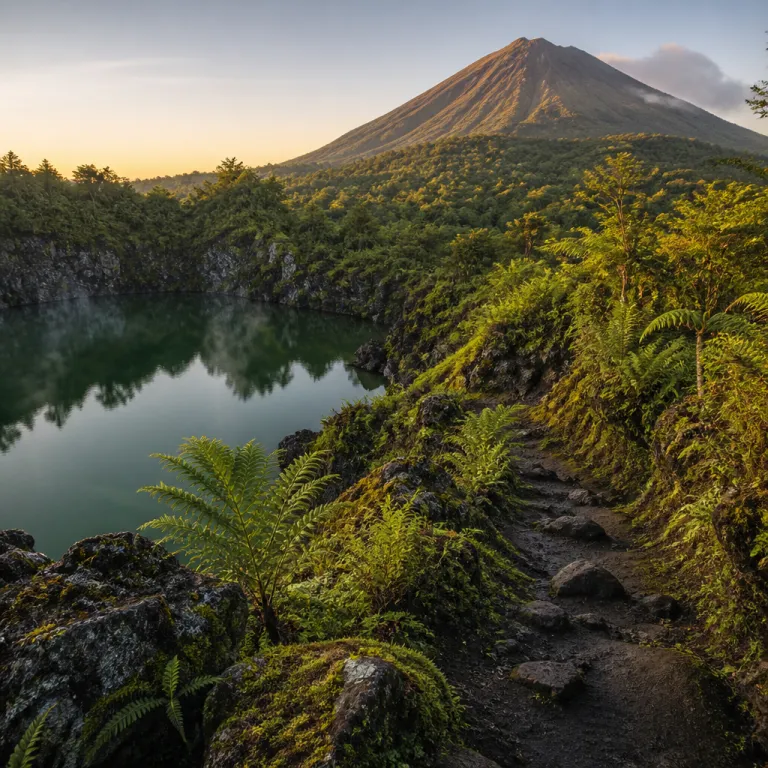
Nevis Peak at first light: why luxury travellers should care
Nevis Peak rises to about 985 metres (3,232 feet), a dormant volcano that quietly governs the island’s weather, water and mood. For luxury travellers choosing where to stay, understanding this mountain and using a well planned Nevis Peak crater hike guide changes how you read every view from your veranda and every breeze across the pool. The ascent to the hidden crater lake is not just a challenging hike, it is the most concentrated half day of landscape, history and solitude you will find in Saint Kitts and Nevis, confirmed by local tourism briefings and regional hiking operators.
From Charlestown’s waterfront you see only a green pyramid, yet the inner crater holds a cool lake ringed by ferns, moss and mist that feels worlds away from the beach clubs. The standard Nevis Peak trail that serious hikers follow begins near Golden Rock Inn, where former sugar fields give way to dense forest and the first steep sections of the path appear almost immediately. This is not a national park in the formal sense, but the mountain functions as the island’s de facto water reserve, feeding springs that supply many of the hotels below, a point often highlighted by the Nevis Tourism Authority and local environmental guides.
On clear days the summit views sweep across to Saint Kitts and, on the sharpest mornings, to islands that sit closer to the United States flight paths than most visitors realise. Yet the real drama lies inside the crater, where the rim folds around a quiet lake that reflects shifting cloud rather than resort lights. A good local guide will help you read the rock layers, the old volcano vents and the way the route will often cling to mud and roots rather than to solid rock, drawing on training materials shared by regional hiking associations and insurance backed guiding companies.
Reading the trail from Golden Rock to the crater rim
The classic route begins on a narrow road above Golden Rock Inn, close to 17.145°N, 62.559°W, where your guide checks the weather forecast one last time before you step into the trees. Here the Nevis Peak crater trail feels deceptively gentle for the first hour as you follow a shaded corridor through breadfruit, mango and banana, hearing only birds and distant water. Within minutes you understand why local guides say, “How long is the hike to Nevis Peak's summit? Approximately 3–4 hours round trip,” a timing echoed in Nevis hiking brochures and standard guide briefings.
As you gain elevation the forest shifts every hundred metres, and the elevation gain becomes more obvious in your legs and lungs. Wild ginger appears beside the path, then tree ferns arch overhead, and the trail will start to tilt sharply upwards with mud, roots and scattered rock underfoot. Guides are recommended for safety, and on this mountain a guide is effectively mandatory, because ropes appear on the steep sections and you need someone who knows which fixed lines to trust and when to turn left onto a less eroded spur, in line with common hotel policies and local guiding protocols.
Higher up, the air cools and the cloud forest closes in, with orchids clinging to every branch and the sense of being inside the volcano rather than on its flank. This is where an experienced Nevis hiking guide earns their fee, explaining how the dormant stratovolcano once shaped the island’s soils and why “Is Nevis Peak an active volcano? No, it's dormant with no recent eruptions.” remains a reassuring fact. That status is consistent with regional geological surveys and monitoring summaries from Caribbean volcanology networks, which track seismic activity across the Lesser Antilles arc.
The crater lake, the rim and the island’s volcanic soul
Reach the top just after dawn and the first thing you notice is silence, then the cool breath rising from the crater lake below. Your guide usually brings you to a narrow notch on the crater rim, where you can look down into the water and across to the Atlantic in a single slow turn. On some days the mist lifts for only a short time, so the best time to start is around 5:30 in the morning, giving you a calm hour at the summit before the cloud folds back over the rim and before the trail becomes slicker on descent.
The inner crater feels like a natural amphitheatre, with steep green walls and a small lake that gathers rainwater rather than glacial melt. There is no rim drive here as you might find around a famous crater in a large national park in the United States, only a faint trail that your guide may follow partway along the rim if the rocks are dry. Many hikers sit quietly instead, watching light move across the water and realising that this hidden park of moss, fern and rock explains why the island’s springs run so clear, a link often mentioned in local natural history walks.
From certain angles you can trace the old volcano vents and imagine how lava once shaped the route of today’s trail, even though the mountain now sleeps. A Nevis Peak crater lake hike also reveals how the same volcanic forces formed Mount Liamuiga on Saint Kitts, another summit that draws hikers who want longer crater experiences. Comparing the two, Nevis Peak feels more intimate and less trafficked, a place where a single day on the trail can tell you more about the country than a week of cross country drives along the coast or a sequence of resort based excursions.
Nevis Peak versus Mount Liamuiga: choosing your mountain from your hotel
Luxury travellers often arrive with Mount Liamuiga on their list, because guidebooks frame it as the marquee volcano hike in the federation. Liamuiga is higher, with a broad crater and a more established trail network that some compare to routes in a compact national park, yet a Nevis Peak crater lake excursion offers a different kind of immersion. On Nevis you trade crowds for solitude, and the crater lake for a quieter, more contemplative summit experience that pairs beautifully with a stay at a refined plantation property or hillside boutique hotel.
From a hotel on Saint Kitts, Liamuiga works well as a full day excursion, with more gradual elevation gain and fewer ropes on the steepest pitches. From a Nevis base, especially one near Golden Rock or the south coast, Nevis Peak becomes the logical challenging hike, a half day that still leaves time for a long lunch and a spa treatment. Many guests will hike Nevis Peak first, then ask their concierge to help them find a guide for Liamuiga, using the contrast between the two volcanoes to frame their understanding of the twin islands and to compare different crater rim perspectives.
Think of Liamuiga as the broad amphitheatre and Nevis Peak as the private box seat, each offering different views into the same volcanic story. The Nevis volcano hike emphasises intimacy, cloud forest and the feeling of stepping into a hidden park wrapped around a lake, while Liamuiga delivers scale and a more open crater rim. If you have the time and fitness, doing both crater hikes during one trip turns your stay into a cross country exploration of the federation’s geological spine, far richer than any sequence of pool days alone or standard sightseeing circuits.
How luxury hotels frame, support and elevate the Nevis Peak hike
On Nevis, the most thoughtful luxury and premium hotels treat Nevis Peak as a central character in your stay rather than a backdrop. At properties like Golden Rock Inn, Montpelier Plantation and the higher hillside retreats, staff know the crater trail intimately and can match you with the right guide, start time and pace. They also understand that a challenging hike at dawn shapes the rest of your day, from the breakfast you need before the trail to the kind of spa treatment your legs will crave afterwards, and they often share printed crater hike outlines at check in.
Concierges usually arrange private guides who meet you at the property, check your gear and make sure you pack enough water, snacks and a light shell for the summit. Many will quietly assess your comfort with exposure and ropes, then choose a route that minimises the most slippery steep sections while still reaching the crater rim. Back at the hotel, the best teams anticipate your return with towels, a late breakfast and perhaps a table set where you can look back at the volcano you have just climbed, sometimes accompanied by a simple trail map or elevation profile marked with your route.
Some properties weave the mountain into their wider activity programme, pairing the Nevis Peak crater lake hike with afternoon soaks in volcanic hot springs or garden spa rituals that use island botanicals. For a deeper sense of how these wellness experiences connect to the island’s geology, explore the dedicated feature on spa hotels in Nevis with volcanic hot springs and garden treatments. When you choose a hotel that understands the mountain, you are not just booking a room with views, you are aligning your stay with the island’s volcanic soul in a way that feels both luxurious and quietly elemental, supported by concierge teams who work closely with licensed local guides.
Practical guidance: safety, gear and timing for the Nevis Peak ascent
Nevis Peak is a strenuous hike with real exposure, and treating it with respect is part of travelling well in the Caribbean. Local guides always start with timing, recommending a dawn departure so you reach the crater lake before clouds build and the heat rises, then descend while the trail is still relatively dry. Starting early also gives you margin if the weather forecast shifts, allowing your guide to adjust the route or turn left onto a safer spur if rain moves in, in line with standard risk management practices used by reputable Nevis guiding outfits.
Underfoot, expect mud, roots and slick rock, with several steep sections where fixed ropes help you pull yourself up short pitches. Good trail shoes or light boots with grip are essential, and you should pack at least two litres of water, a small snack and a light rain layer even on apparently clear days. This is not a place for camping or cross country detours, because the forest is dense and the narrow path can vanish quickly if you stray from your guide, and there are no formal backcountry campsites or public shelters inside the crater area.
Guides carry navigation aids such as GPS, but they rely more on years of experience reading the mountain’s subtle cues. They know how long each section should take, when the trail will become slick, and where the rock and rope combinations feel most secure for different body types. Treat their instructions as non negotiable, and remember that turning back before the top can still leave you with a rich sense of the volcano, the park like forest and the way this mountain quietly shapes every glass of water poured in the hotels below. For permits, contact details and current conditions, your hotel concierge or the Nevis Tourism Authority can provide up to date, verifiable information before you set out.
FAQ
Is Nevis Peak an active volcano and is it safe to hike ?
Nevis Peak is a dormant stratovolcano with no recent eruptions, and regional geological monitoring considers it stable for guided hiking. The main risks on the crater route are weather, mud and exposure on steep sections, which a qualified guide manages carefully. For most reasonably fit adults, it is a safe but demanding adventure when tackled with proper gear and an early start, and you can confirm current advisories through your hotel or the Nevis Tourism Authority before booking.
How long does the Nevis Peak hike take from the trailhead ?
The ascent and descent typically take between three and five hours, depending on fitness, trail conditions and how long you spend at the crater rim. Many hikers allow a full half day from their hotel, including transfers of 20–35 minutes from most Nevis resorts to the trailhead near Golden Rock Inn and time for breaks. Guides usually plan the schedule so you reach the crater lake shortly after sunrise, when views are clearest and the ropes and roots are less slippery underfoot.
Do I really need a guide for the Nevis Peak crater lake trail ?
While some experienced hikers attempt the route alone, a guide is strongly recommended and often required by reputable hotels. The trail can be confusing in cloud, there are ropes on exposed sections, and local knowledge of the volcano’s microclimates is invaluable. Booking through your hotel or the Nevis Tourism Authority ensures you hike with someone properly insured and familiar with current conditions, and they can also advise on any permits or waivers needed for the crater hike.
How does Nevis Peak compare to Mount Liamuiga for hikers ?
Mount Liamuiga on Saint Kitts is higher and has a broader crater, with a slightly longer but more gradual trail that many consider less technical. Nevis Peak is shorter but steeper, with more ropes and mud, and the reward of a more intimate crater lake setting. Serious hikers often tackle both, using Nevis Peak as a concentrated, half day test piece and Liamuiga as a more expansive follow up, comparing elevation profiles, trail maps and guiding styles across the two islands.
What should I wear and pack for the Nevis Peak hike ?
Wear lightweight hiking shoes with good grip, quick drying clothing and a small daypack. You should pack at least two litres of water, snacks, a light rain jacket, insect repellent and a small first aid kit, even if your guide carries extra supplies. Many luxury hotels on Nevis can lend trekking poles or arrange packed breakfasts, making it easier to start before dawn without logistical stress, and some provide simple printed packing checklists for the crater lake hike at reception.