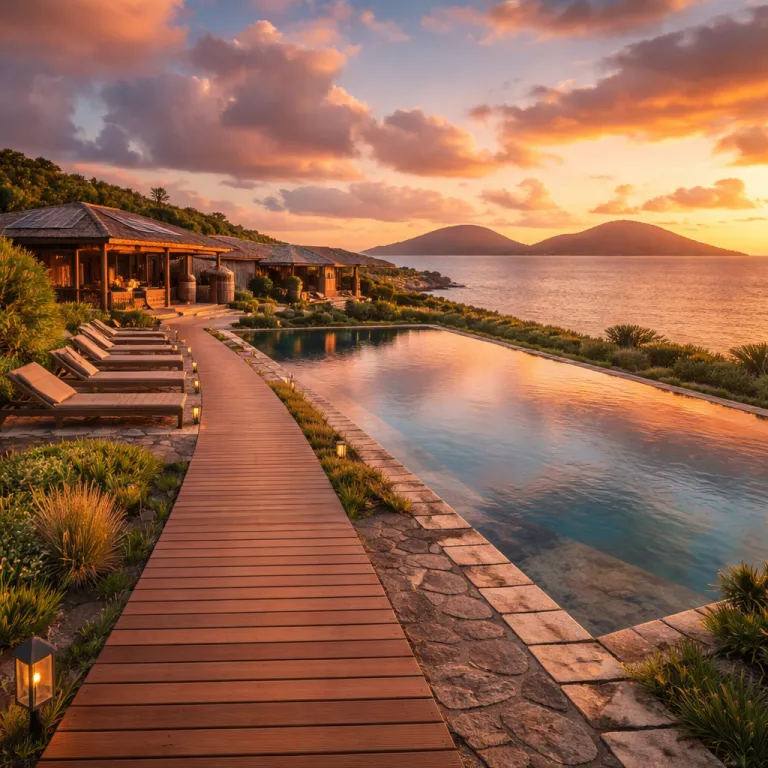
Why sustainable luxury travel in the Caribbean starts to feel different in Saint Kitts and Nevis
On Saint Kitts and Nevis, sustainable luxury travel in the Caribbean is not a marketing slogan, it is a scale issue. When an entire Caribbean federation of two islands and roughly 55,000 residents leans into tourism, every resort decision about water, energy and land use is immediately visible to local communities. Couples who choose an intimate Caribbean hotel here over a mass market destination are making a quiet statement about responsible tourism and about the kind of future generations they want to support.
The Sustainable Destination Council, created as a cross sector body to steer sustainable tourism development, treats sustainability as infrastructure rather than décor. Its work ranges from advising on eco friendly resort construction on the slopes of the central mountain to encouraging hotel operators to reduce pressure on natural resources such as freshwater and the near shore coral reef. In a 2023 tourism briefing, Minister of Tourism Marsha Henderson reiterated that “sustainable tourism ensures that the natural beauty and ecological integrity of St. Kitts are preserved for generations to come,” a line that has become a touchstone for the hospitality industry on the islands. As one council advisor explained in that same briefing, “every new hotel we approve has to show how it will protect the coastline, not just how many rooms it will add.”
For couples, this policy language translates into very tangible experiences at the hotel level. You feel it when a luxury resort offers filtered water in glass rather than plastic, or when a Caribbean hotel concierge steers you toward national parks instead of crowded cruise ship beaches. You notice it when staff explain how renewable energy systems on property cut emissions while keeping suites cool and quiet, and when the resort chef talks about sourcing jade green vegetables and local fruit from farms within a few kilometres.
There is a tension here, and it is healthy. Cruise ships can disembark more than 6,600 guests in a single morning, testing the environmental promises made by tourism boards and by individual hotel brands. Local fisheries officers note that sudden spikes in visitor numbers can coincide with short term stress on near shore reef fish, which makes monitoring and zoning essential. Yet couples who stay on island for several nights spread their spending across local restaurants, reef friendly dive operators and community guides, which makes this form of high end travel far more sustainable. In this context, upscale Caribbean vacations become less about guilt free indulgence and more about choosing a region where your presence strengthens, rather than strains, the community.
Saint Kitts and Nevis also sit in conversation with the wider Caribbean. Properties such as Tortuga Bay Resort in the Dominican Republic, Bucuti & Tara Beach Resort in Aruba and Coulibri Ridge in Dominica show how a resort can combine renewable energy, eco friendly design and high touch service without sacrificing comfort. Their success has helped normalize the idea that guests can expect both sustainability and serious luxury in the Caribbean, and that islands from Turks and Caicos to the Dominican Republic can compete on environmental performance as much as on beach quality.
Estate by estate: how luxury hotels on Saint Kitts and Nevis are rewriting the Caribbean resort playbook
The most interesting sustainable luxury travel in the Caribbean rarely happens in anonymous towers; it happens on former sugar estates. On Saint Kitts, Belle Mont Farm at Kittitian Hill has become a reference point for how a resort can embed sustainability into its bones, from low impact architecture that hugs the mountain contours to an organic farm that supplies most of the hotel kitchen. Guests wake to views that sweep across the islands and out toward the wider Caribbean region, yet the real luxury is tasting fruit grown metres from the breakfast table.
What sets Belle Mont Farm apart is not only its farm to table narrative but its systems thinking. Rainwater harvesting, careful water reuse and a commitment to renewable energy reduce strain on local infrastructure, while paths are designed to protect soil and nearby reef systems from runoff. A municipal water engineer on Saint Kitts notes that properties with on site storage and reuse can cut their draw on public supplies by double digit percentages during the dry season. This is sustainable tourism expressed through design choices that respect natural resources, rather than through a single eco friendly amenity placed in a bathroom.
Across the channel on Nevis, heritage preservation has become a form of sustainability in its own right. The restoration of the historic Bath Hotel, supported by a conservation first grant, shows how the hospitality industry can protect cultural assets while creating new spaces for guests to engage with local history. When a Caribbean hotel invests in stonework instead of new concrete, it locks in lower embodied energy and gives couples a richer sense of place.
These properties also force a rethink of what a resort club experience looks like in a small island context. Instead of sprawling golf clubs with manicured greens down to the waterline, Saint Kitts and Nevis are nurturing more compact courses and walking trails that respect the mountain slopes and coastal wetlands. If you are planning a stay that includes fairways and sea views, the detailed guide to luxury golf resorts in Saint Kitts on the independent editorial site stay in saint kitts and nevis dot com shows how the best properties balance course design with environmental commitments.
Couples comparing Saint Kitts and Nevis with destinations such as Turks and Caicos or the Dominican Republic will notice a different rhythm. Where Grace Bay or Providenciales Turks can feel like a continuous strip of resort façades, the Kittitian and Nevisian coasts still alternate between small hotels, local villages and undeveloped headlands. Sustainable luxury travel in the Caribbean, in this context, means accepting fewer dining outlets in exchange for more stars, more reef life and more meaningful contact with community guides who know every jade coloured bay by name.
For travellers who value privacy, the federation’s scale is an asset rather than a limitation. Some couples look to clothing optional experiences elsewhere in the region, and resources such as this guide to refined escapes at clothing optional resorts in the Caribbean, produced by the same independent platform, can help frame expectations about discretion and design. On Saint Kitts and Nevis, the emphasis is less on overt hedonism and more on quiet seclusion, where a hillside plunge pool and the sound of water in the ravine below feel more luxurious than any crowded beach club.
From jade mountain to Nevis Peak: how couples can align romance with responsibility
Couples who care about sustainable luxury travel in the Caribbean often look first to headline properties such as Jade Mountain and Anse Chastanet in Saint Lucia. Those resorts have become shorthand for open air suites, private pools and a direct relationship with the surrounding reef and mountain landscapes. When you book a hotel on Saint Kitts or Nevis, you are tapping into the same Caribbean conversation about how to pair high end design with low impact operations.
On Nevis, the volcanic cone of Nevis Peak dominates the skyline and shapes the island’s microclimates. Trails that climb through forest toward the mountain summit pass old estate ruins and pockets of jade coloured bromeliads, reminding guests that sustainable tourism depends on intact ecosystems, not just on efficient hotel lighting. Choosing guided hikes with local operators who respect national parks and reef protected zones is one of the most direct ways couples can support environmental goals while deepening their own experience.
The islands also share a spa culture that feels rooted rather than imported. Nevis’s hot springs, once the preserve of the Bath Hotel, are part of a wider volcanic spa tradition that has been carefully reinterpreted for modern wellness travellers; you can explore that heritage in depth through this feature on the volcanic spa tradition that makes Nevis unique. When a hotel channels geothermal water into small, thoughtfully designed pools instead of building vast, chlorinated complexes, it reduces energy use and keeps the focus on the landscape rather than on spectacle.
Looking beyond the federation, the broader Caribbean offers useful benchmarks. In Turks and Caicos, for example, resorts along Grace Bay and on Providenciales Turks have begun to integrate renewable energy systems and reef friendly practices to protect their coral reef assets, while in the Dominican Republic, projects such as Cayo Levantado Resort and Tortuga Bay Resort show how a resort can support local community livelihoods without overwhelming fragile coastlines. These examples matter because they prove that guests will pay for luxury travel that is both sustainable and deeply Caribbean, and they push Saint Kitts and Nevis hotels to keep raising their own standards.
For couples, the practical question is how to translate these big ideas into booking decisions. Start by asking each hotel how it manages water, energy and waste, and how it engages with nearby villages and conservation projects; the most credible properties will have specific answers rather than vague mission statements. Then look at how the resort experience itself connects you to the islands, whether through reef safe snorkelling, farm visits, or evenings spent in a local club listening to live music instead of staying inside an all inclusive bubble.
How to book smarter: using a Saint Kitts and Nevis hotel search to support sustainable Caribbean tourism
A luxury and premium hotel booking website focused on Saint Kitts and Nevis can be more than a catalogue; it can be a filter for values. When you search for sustainable luxury travel in the Caribbean on a curated platform such as stay in saint kitts and nevis dot com, which operates as an independent comparison and editorial site rather than a single brand’s marketing channel, you are not just comparing room sizes and infinity pools, you are evaluating how each resort treats sustainability as part of its core identity. The most useful listings make it easy to see which Caribbean hotel partners with local farmers, which one invests in renewable energy and which one supports reef conservation or national parks.
Thoughtful platforms also help demystify the language of sustainability for guests. Instead of burying commitments in a privacy policy page, they highlight concrete actions such as solar panel installations, rainwater harvesting systems and eco friendly amenities that reduce plastic waste. They may reference leaders across the Caribbean region, from Coulibri Ridge in Dominica to Bucuti & Tara Beach Resort in Aruba, to show how the hospitality industry is evolving and to give couples a benchmark when they read about a Saint Kitts or Nevis property’s environmental claims.
For many travellers, the barrier is not intent but information overload. That is why sections dedicated to asked questions and frequently asked questions about sustainable tourism can be so powerful, especially when they echo guidance from organizations such as the Global Sustainable Tourism Council, which reports that around 70% of travelers now seek more sustainable options in its annual consumer surveys. When a booking site explains how to verify certifications, how to read between the lines of marketing copy and how to balance cost with impact, it turns abstract concern for future generations into specific, confident choices.
There is also room for more editorial courage. A truly independent guide to sustainable luxury travel in the Caribbean should be willing to say when a resort on Turks and Caicos, the Dominican Republic or even within Saint Kitts and Nevis falls short on protecting water quality, coral reef health or community interests, just as it should celebrate properties that go beyond compliance. For couples planning an island getaway, that honesty is part of the luxury, because it saves time, protects natural resources and ensures that the money you spend on romance also strengthens the islands you have chosen to love.
Key figures shaping sustainable luxury travel in the Caribbean
- According to traveler surveys summarized by the Global Sustainable Tourism Council (GSTC) in its 2022–2023 market insights, roughly 70% of travelers now actively seek sustainable options, which means demand for eco friendly luxury travel is no longer a niche preference but a mainstream expectation.
- Data highlighted by the Caribbean Tourism Organization (CTO) in regional investment briefings indicate that the number of eco oriented luxury resorts in the region has increased by roughly 50% since the early 2010s, reflecting how deeply sustainability has entered the hospitality industry’s investment decisions.
- On small island states such as Saint Kitts and Nevis, cruise ships can disembark more than 6,600 passengers in a single day, a volume that underscores why careful tourism management is essential to protect water supplies, coral reef systems and community wellbeing.
- Cross sector bodies such as the Sustainable Destination Council in Saint Kitts and Nevis illustrate how governance structures are evolving to integrate sustainable tourism into national planning, rather than treating it as a voluntary add on for individual hotels.