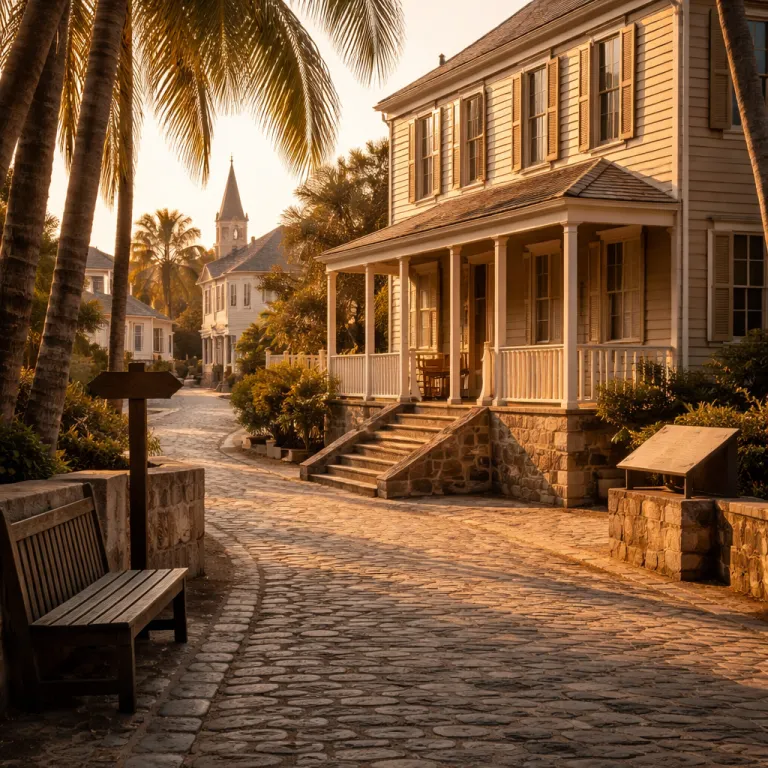
Alexander Hamilton’s Nevis birthplace in Charlestown for luxury travellers
The phrase “alexander hamilton nevis birthplace charlestown” sounds clinical, yet the reality feels intimate and textured. On Nevis, the low stone Hamilton House on the Charlestown waterfront anchors a compact district where trade winds, volcanic light and Caribbean harbour views shaped a young man who would later influence the United States. For business-leisure travellers choosing between high-end suites on Saint Kitts or refined plantation retreats on Nevis island, this small birthplace museum offers a rare cultural counterpoint to poolside time and boardroom agendas.
Alexander Hamilton was born in Charlestown, Nevis, probably on 11 January 1755 or 1757, and the restored birthplace now forms part of the Museum of Nevis History complex at Low Street, Charlestown, Nevis. The Museum of Nevis History team presents his early years within a broader frame of Nevis history, linking the modest house to sugar-led wealth, enslaved labour and the wider Saint Kitts–Nevis trade network. One of the most useful plaques answers the question many guests quietly carry from Wikipedia or school: “Where was Alexander Hamilton born? – Charlestown, Nevis, in the Caribbean,” echoing wording used by the U.S. National Archives and the Library of Congress.
For luxury hotel guests, the power of this birthplace museum lies in its scale and proximity. You can leave a shaded veranda suite, walk five minutes through Charlestown’s streets and stand inside the museum rooms where the future Treasury Secretary first knew the sound of surf and market chatter. The Nevis Historical and Conservation Society, which manages this heritage site, keeps interpretation focused and precise, which suits time-poor executives who want depth without an academic tour; one local guide summarised it neatly as “small rooms, big ideas.”
Inside Hamilton House: how a modest museum reframes power and money
Step through the doorway of Hamilton House and the temperature drops slightly, stone walls holding the night’s cool. This former merchant dwelling, now the central Hamilton museum space within the Museum of Nevis History, uses compact rooms and carefully chosen artefacts to show how a boy from a small island could later advise President George Washington on building a national financial system. Panels in the Nevis galleries trace Alexander Hamilton from his Nevis childhood to his role in the early United States, always circling back to the Caribbean port that framed his first views of credit, risk and trade.
Curators working with the Nevis Historical and Conservation Society resist the temptation to romanticise the story. They emphasise that Hamilton’s mother, Rachel Faucette, faced social and legal constraints in Charlestown, and that the young man grew up amid the harsh realities of slavery and sugar, not just picturesque harbour scenes. One display answers a second core question without embellishment: “What is the Hamilton House? – A museum at Hamilton's birthplace.” A short reference panel cites primary documents, including parish records and early biographies, to explain why historians still debate his exact birth year.
For travellers staying in luxury properties on Saint Kitts or Nevis, this clarity matters. The museum’s narrative helps frame later conversations over rum tastings or chef’s table dinners about how Nevis history still shapes regional society and modern wealth. A practical 90-minute itinerary works well: arrive at the Museum of Nevis History for opening time, spend 45 minutes inside Hamilton House and the adjacent galleries, then follow a 45-minute loop through nearby streets before a long lunch at a refined local restaurant. Read more context from serious outlets rather than relying on a quick Wikipedia search while you wait for dessert, perhaps after exploring the island’s real culinary identity through a guided tasting referenced in this in-depth guide to Saint Kitts cuisine.
Walking Charlestown: a compact tour that connects harbour, trade and heritage
A Charlestown walking tour turns the phrase “alexander hamilton nevis birthplace charlestown” into a lived itinerary rather than a line in a textbook. Start at the Hamilton birthplace on the waterfront, then follow your guide through Charlestown streets where Georgian-era stonework, wooden galleries and arcaded walkways still echo the town’s role in the wider Saint Kitts and Nevis economy. With the Caribbean sun high, shaded alleys and sea breezes make this short tour comfortable even for travellers stepping out from air-conditioned suites.
Guides trained by the Nevis Historical and Conservation Society usually frame the route around trade and finance rather than simple hero worship. They point out warehouses where sugar and rum once moved between Saint Kitts, Nevis and other Caribbean ports, explaining how this traffic shaped the young man who later argued for a strong central bank in the United States. One panel in the Museum of Nevis History summarises the link in plain language: “How did Nevis influence Hamilton? – Early experiences shaped his perspectives.” A typical loop might run from Low Street and the waterfront to the market square, the Jewish cemetery and back via Government Road, keeping walking time under an hour.
The most thoughtful tours weave in the Jewish cemetery, Anglican churches and former merchant houses to show how a layered society underpinned Hamilton’s early world. You will pass buildings now converted into law offices, guesthouses and discreet luxury stays, where historical conservation has preserved stone walls and timber beams while adding high thread-count linens. For travellers considering a stay in a restored sugar estate near town, it is worth reading this analysis of why the converted sugar estate may be the most honest form of luxury hospitality before you book, especially if you want to balance heritage architecture with modern comforts and easy access to Charlestown.
From plantation ledgers to modern suites: where to stay near Hamilton’s streets
Choosing a luxury base near Charlestown means deciding how closely you want to live with Nevis history during your stay. Plantation-style properties in the hills above Charlestown offer cool air, long views across to Saint Kitts and architecture that dates back to the same trading era that shaped Alexander Hamilton’s childhood. Down by the coast, low-rise resorts and private villas place you closer to the harbour where Hamilton’s mother once navigated a complex colonial society and where small boats still shuttle passengers between Saint Kitts and Nevis.
Many of the most characterful hotels occupy former estate houses whose stone cisterns and mill walls now frame pools, spas and open-air restaurants. These properties often work with the Nevis Historical and Conservation Society on conservation, ensuring that Hamilton House–style masonry and original timber details are preserved rather than replaced. For business travellers, the combination of reliable Wi‑Fi, attentive service and tangible links to Nevis historical narratives creates a setting where meetings can segue naturally into conversations about trade, risk and the Caribbean’s role in shaping the United States and wider Atlantic finance.
On the booking side, look for hotels that offer flexible check-in times, private transfers from Saint Kitts and curated Charlestown tours that include the Hamilton museum and wider Museum of Nevis History. Some concierge teams can arrange private access to the birthplace museum outside regular visiting hours, which suits executives with tight schedules. To understand how the islands’ top properties are evolving their offer, the long-form analysis of seasonal upgrades in this guide to how Saint Kitts and Nevis quietly levelled up provides useful context before you commit to a particular house or resort.
Why Hamilton’s Nevis matters for business leisure travellers
For many visitors, the phrase “alexander hamilton nevis birthplace charlestown” initially feels like a side note to beach plans. Yet for executives who live in a world of balance sheets, regulation and global markets, walking from a refined hotel lobby to the Hamilton birthplace offers a rare alignment between professional interests and leisure time. Standing in the museum rooms, you can trace a direct line from Caribbean ledgers to the financial architecture of the United States.
Charlestown’s compact scale means you can fold serious cultural content into a single morning without sacrificing pool or spa hours. A guided tour that links the Museum of Nevis History, the Jewish cemetery, former merchant houses and the harbourfront gives you a grounded sense of how Saint Kitts and Nevis once functioned as a node in Atlantic trade. That context can make later meetings in Saint Kitts boardrooms or informal conversations over rum in a plantation house bar feel richer, as you connect present-day investment flows to Nevis historical patterns and the legacy of Hamilton’s policies.
For travellers who value narrative as much as amenities, this is the quiet luxury of Nevis. You are not just booking a room with a view of Saint Kitts, but a stay in a living case study of how a small Caribbean society shaped a future president’s closest adviser on finance. The result is a trip where the Hamilton-born story, the role of Hamilton’s mother in a stratified town and the work of the conservation society all become part of your own travel history, not just lines skimmed on Wikipedia between emails or calls.
FAQ
Where exactly is Alexander Hamilton’s birthplace in Charlestown ?
Alexander Hamilton’s birthplace stands on the waterfront in Charlestown, Nevis, within the Museum of Nevis History complex. Hamilton House is a low stone building facing the Caribbean Sea on Low Street, a short walk from the main square and pier. Most hotel concierges on Saint Kitts and Nevis can arrange a direct transfer and guided visit, typically using the public ferry from Basseterre or a private water taxi followed by a short drive.
How long should I plan for a visit to the Hamilton museum ?
A focused visit to the Hamilton museum and wider Museum of Nevis History typically takes 45 to 60 minutes. If you add a guided walking tour of Charlestown streets, the Jewish cemetery and nearby historical houses, allow two to three hours. This timing fits easily into a business-leisure schedule without sacrificing resort or meeting commitments, especially if you start soon after the museum’s usual morning opening around 9:00 a.m.
Is the Museum of Nevis History suitable for children and families ?
The Museum of Nevis History presents complex Nevis history in clear, accessible language that older children can follow. Exhibits on Alexander Hamilton’s early life, his mother and the realities of Caribbean trade help families discuss topics like slavery and migration in an age-appropriate way. Staff from the Nevis Historical and Conservation Society are used to mixed-age groups and can adapt explanations during tours, often pointing out specific artefacts or maps that resonate with younger visitors.
What should I wear for a Charlestown walking tour ?
Charlestown’s streets are compact but often sun-exposed, so light clothing and a hat are essential. Comfortable walking shoes are recommended because pavements can be uneven near older house fronts and harbour areas. Many guides suggest starting in the cooler morning time, then returning to your hotel for lunch and a swim, with a light showerproof layer in your bag during the wetter months from June to November.
Can I visit Hamilton’s birthplace independently, or do I need a guide ?
You can visit the birthplace museum independently by paying a modest entry fee at the Museum of Nevis History, which is generally open on weekdays and most cruise-ship days; current ticket prices and exact hours are posted on-site and through the Nevis Historical and Conservation Society. Informational plaques inside Hamilton House and around the site provide enough context for a self-guided tour. However, travellers with a strong interest in finance, politics or Nevis historical detail often gain more from a guided tour arranged through their hotel or the conservation society, which can also coordinate private transport from Saint Kitts.