Carib petroglyphs, Saint Kitts and Amerindian heritage beyond the sugar story
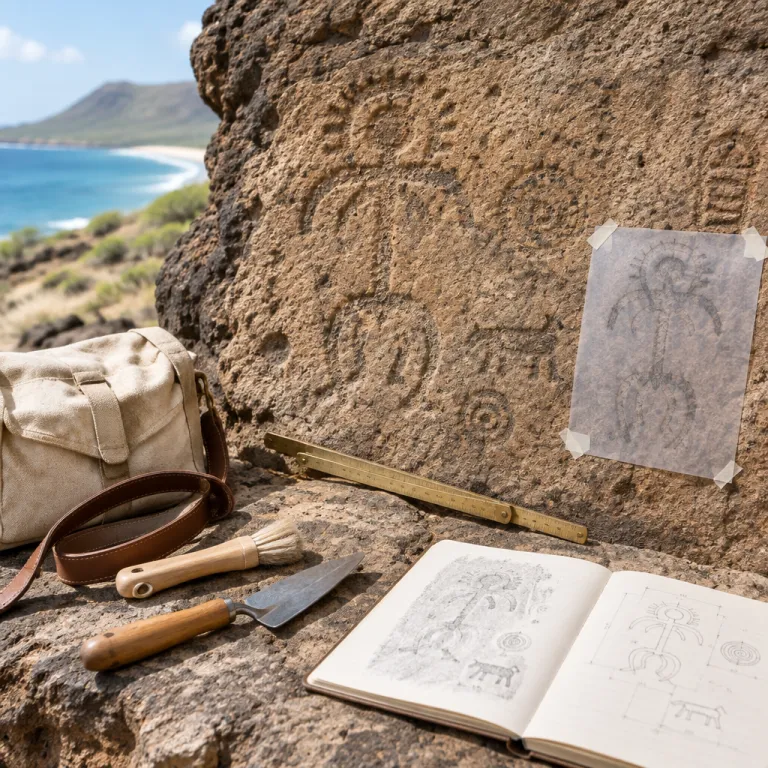
Stand on the Old Road above Wingfield Estate and the sugar narrative falls quiet. Ahead of you, the carib petroglyphs Saint Kitts Amerindian heritage sits on a single boulder, its rock art cut into the surface long before any British cane field. The scene feels intimate, almost domestic, yet it carries the weight of an entire Caribbean island story.
The engravings are a cluster of petroglyphs with human like figures, geometric shapes and looping lines that resist easy explanation. Scholars speak carefully about these carvings, noting that the indigenous people who carved them left no written key, so any dating will remain cautious and rooted in comparison with other Antilles sites. What you see is not a museum display but a living fragment of culture, framed by breadfruit trees and the low murmur of the nearby river.
For luxury travelers used to polished plantation houses, this ancient surface shifts the axis of history. The carib petroglyphs Saint Kitts Amerindian heritage reminds you that indigenous peoples shaped this landscape years ago, long before the first estate wall went up. Once you have seen these carvings, every restored great house and every kitts photo of cane fields feels layered with older memory.
The site lies just off the road that climbs toward Wingfield, a short walk from where most private drivers pause. It is easily accessible, yet many people drive past, focused on the more famous sugar ruins and the manicured lawns of Romney Manor. For a solo explorer, that quietness is a gift, allowing time to read the rock art slowly and to frame each photo as more than a backdrop.
Think of this boulder as a threshold between narratives. On one side stands the familiar British colonial history, with its forts, rum and restored estates ; on the other side, the carib petroglyphs Saint Kitts Amerindian heritage opens a window toward south America, the Antilles and the wider migration of indigenous people across the Caribbean. Your hotel choice nearby becomes not just about comfort, but about how easily you can return here at different times of day.
Reading the carvings: what the rock art shows, and what it refuses to say
Look closely at the island petroglyphs and you will notice repetition. Several carvings show stylised faces with circular eyes and radiating lines, while other petroglyphs lean toward abstract geometric shapes that could suggest movement, water or ritual. The rock art is shallow yet precise, each carved line still visible despite the years ago that separate you from the carib hands that made them.
Archaeologists tend to compare these carvings with similar petroglyphs from Puerto Rico, Trinidad and the island Montserrat, building a cautious regional picture. They speak of indigenous people whose culture linked the Antilles to south America, and of artifacts island by island that show shared motifs rather than identical scripts. No serious scholar claims to read these carvings as a literal text, and any guide who does should be treated with polite skepticism.
What you can say with confidence is that these petroglyphs mark presence and intention. The carib petroglyphs Saint Kitts Amerindian heritage suggests that this valley mattered to a community, perhaps as a route inland, perhaps as a place of gathering or ceremony. When you stand here, the luxury hotel on the coast feels pleasantly distant, while the sound of the river and the filtered light over the carvings feel immediate.
Photography is tempting, and a well framed kitts photo can be a powerful way to remember the site. Take your time before lifting the camera, though, and let your eyes trace each carved line until the rock art stops feeling like a pattern and starts feeling like a set of decisions. When you finally take a photo, think of it less as a trophy and more as a record of a meeting between peoples across centuries.
Across the Caribbean, from Montserrat petroglyphs to panels in Trinidad and Puerto Rico, similar carvings appear on boulders near rivers, passes and coastal approaches. The director Montserrat of the Montserrat National Trust, Sarita Francis, has spoken about how island petroglyphs there sit within living communities rather than behind ropes, and that insight travels well to Saint Kitts. When you read the carvings here, you are not decoding a dead language ; you are acknowledging an indigenous community whose descendants still shape Caribbean culture.
Bloody Point, Wingfield Estate and a half day that reframes the island
Most luxury itineraries on Saint Kitts pair Wingfield Estate with Romney Manor, then move on to lunch and the beach. To understand how the carib petroglyphs Saint Kitts Amerindian heritage unsettles that polished circuit, you need to fold Bloody Point into the same half day. The result is a cultural arc that runs from ancient carvings through violent contact to the manicured calm of a former sugar estate.
Bloody Point, a short drive from the petroglyphs, is associated with a brutal clash between British colonists and indigenous peoples that helped clear the way for plantation expansion. Heritage sources describe this ravine as a place where the balance of power on the island shifted decisively, and where the carib presence that created the petroglyphs was violently reduced. Standing there after you have studied the carvings, the word history feels painfully literal rather than abstract.
From Bloody Point, continue up to Wingfield Estate, where stone arches and mill ruins speak the language of sugar, rum and British capital. A guided rum tasting in the old distillery ruins, such as those offered in the historic Wingfield rum experience, takes on a different tone once you have the Amerindian layer in mind. You are no longer just sipping aged spirits ; you are tracing how one economy replaced another on the same ground.
Next door, Romney Manor offers landscaped gardens, a stately great house façade and the kind of curated calm that luxury travelers appreciate. From a shaded bench you can look back toward the hills where the petroglyphs sit, and forward toward the sea where your hotel waits, and feel the island compress into a single line. This is where a carib petroglyphs Saint Kitts Amerindian heritage visit stops being a side trip and becomes the lens through which you read every plantation ruin.
Plan this half day with the same care you give to a spa reservation. Ask your driver or concierge to start at the carvings, pause at Bloody Point, then allow unhurried time at Wingfield and Romney Manor before returning to the coast. The sequence matters, because it lets the older story speak first, and it ensures that the luxury of your evening feels informed rather than insulated.
From Montserrat to Saint Kitts: connecting island petroglyphs across the Caribbean
Saint Kitts does not stand alone ; its carib petroglyphs Saint Kitts Amerindian heritage belongs to a wider constellation of rock art across the Caribbean island chain. On the island Montserrat, for example, a set of carvings came to wider attention when a hiker noticed geometric shapes and faces on a boulder in the forest. Those Montserrat petroglyphs quickly drew the attention of archaeologists and of the Montserrat National Trust.
There, the National Trust, under the guidance of figures such as Francis, director of heritage initiatives, has worked to place the carvings within both academic research and community life. Public statements have highlighted how petroglyphs Sarita Francis and her équipe helped bring to light are not isolated artifacts island by island, but part of a network of indigenous expressions stretching from south America through the Antilles. When you stand at the Saint Kitts carvings, you are effectively standing in the same cultural corridor as visitors to Montserrat, Trinidad or Puerto Rico.
For a traveler based in a high end property on Nevis or Saint Kitts, this regional context can shape future trips. You might pair a stay at a restored plantation inn with a side journey to Montserrat, using a day boat or short flight to reach the island and its own petroglyphs. In doing so, you trace a route that links luxury hospitality with a deeper engagement with indigenous people and their enduring culture.
Photography again plays a role, but here the idea of photo courtesy becomes important. When institutions publish a kitts photo or an image of Montserrat petroglyphs, they often label it “photo courtesy” of a national trust or local community, acknowledging stewardship rather than ownership. As a guest, you can mirror that respect by treating your own images as borrowed views, not as commodities.
Across these islands, from British linked territories to independent states, the same questions recur. How do you protect fragile carvings without cutting them off from the community that lives around them, and how do you welcome visitors without turning sacred rock art into a theme park stop ? The most thoughtful luxury travelers are starting to ask these questions at check in, and the best properties are ready with nuanced answers.
Staying well: choosing luxury hotels that honour Amerindian heritage
Where you sleep shapes how you read the island the next morning. On Saint Kitts and Nevis, the most rewarding luxury stays are those that acknowledge carib petroglyphs Saint Kitts Amerindian heritage as part of their sense of place, not just as an optional excursion. That might mean a plantation inn that references indigenous peoples in its house history, or a beach resort that works with local guides trained in heritage interpretation.
Some properties, especially on Nevis, sit on former estates that once looked only toward sugar and the British Atlantic. A stay at a historic beachside estate, such as the one profiled in this guide to the only Nevis estate that runs to its own sand, feels richer when you carry the memory of the carvings inland. You begin to see the manicured lawns, the stone cisterns and the old windmill bases as later layers over an older indigenous community landscape.
When speaking with concierges or private drivers, be explicit about wanting more than a quick kitts photo stop at the carvings. Ask who maintains the path, whether any local national trust or community group is involved, and how your visit can support that work. The answer may be as simple as hiring a particular guide, or as structured as joining a small group led by a heritage trained interpreter.
Solo explorers often worry about logistics, but the petroglyphs sit close enough to the main road that a private transfer from most west coast hotels takes less than thirty minutes. Combine the visit with lunch at a nearby estate restaurant and an unhurried walk through the Wingfield ruins, and you have a half day that balances contemplation with comfort. Returning to your room, the usual Caribbean luxuries — the plunge pool, the rum punch, the sunset — feel newly contextualised.
Over time, the hope is that more properties will weave Amerindian narratives into their guest materials, just as they already celebrate Afro Caribbean culture and post plantation history. When that happens, carib petroglyphs Saint Kitts Amerindian heritage will no longer be a quiet footnote to the sugar story, but a starting point for how the island presents itself to the world. As a guest, your choices and your questions help accelerate that shift.
FAQ
How do I get to the Carib petroglyphs from my hotel on Saint Kitts ?
The carvings sit just off the Old Road that leads inland toward Wingfield Estate, on the western side of the island. From most luxury hotels on the Frigate Bay or southeast peninsula areas, a private taxi or hotel car can reach the site in around 25 to 30 minutes. Ask your concierge to arrange a driver who knows the exact pull off, as there is no large sign or visitor center.
How much time should I plan for visiting the petroglyphs and nearby sites ?
If you only want to see the rock art, you can view the carvings in 20 minutes, but that approach misses much of the context. A more rewarding plan is to set aside a half day, combining the petroglyphs with Bloody Point, Wingfield Estate and Romney Manor. This allows time for unhurried viewing, photography, and a relaxed drink or lunch at one of the estate cafés.
Are the Carib petroglyphs on Saint Kitts protected or part of a formal heritage program ?
The carvings are recognised locally as important evidence of Amerindian presence on the Wingfield Estate lands, and they are treated as an archaeological site rather than a casual viewpoint. While there is no large museum style infrastructure on site, heritage authorities and local guides are aware of the need to protect the rock surface from touching, climbing or vandalism. Visitors can support this informal protection by following guidance, staying on the path and using only minimal, non intrusive photography.
Can I visit the petroglyphs independently, or do I need a guide ?
You can visit independently with a taxi or rental car, as the boulder lies close to the main road and the walk from the pull off is short. However, a knowledgeable guide can add depth by explaining the wider Amerindian context, the link to Bloody Point and the relationship between the carvings and later plantation history. Many luxury hotels can recommend heritage focused guides who balance respectful interpretation with practical logistics.
What should I keep in mind to visit the site respectfully ?
Treat the carvings as you would a small open air shrine or memorial, not as a playground or climbing rock. Avoid touching the carved lines, keep voices low if other visitors are present, and frame your photos in a way that honours the site rather than using it as a prop. Leaving no litter, staying on established paths and supporting local heritage initiatives through your hotel or guide are simple ways to show respect.